As a dedicated supplier of Monoblock Control Valves, I’ve witnessed firsthand the pivotal role these components play in a wide range of industrial applications. Understanding the flow characteristics of Monoblock Control Valves is essential for optimizing system performance, ensuring efficiency, and maintaining reliability. In this blog, we’ll delve into the intricacies of these flow characteristics, exploring how they impact various operations and why they matter to our customers. Monoblock Control Valves
Fundamentals of Monoblock Control Valves
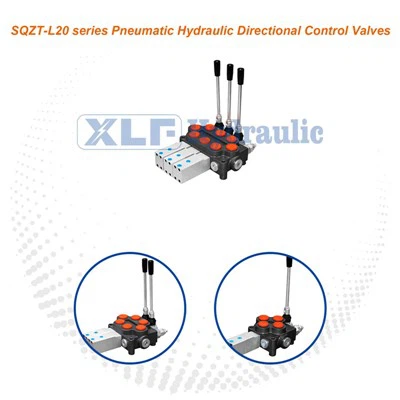
Before we dive into the flow characteristics, it’s important to have a basic understanding of what Monoblock Control Valves are. These valves are designed as a single, integrated unit, housing multiple valve functions within a single body. This monolithic construction offers several advantages, including compactness, reduced leakage paths, and improved reliability. They are commonly used in hydraulic systems to control the flow, pressure, and direction of fluid, playing a crucial role in applications such as construction equipment, agricultural machinery, and industrial automation.
Flow Rate and Capacity
One of the primary flow characteristics of Monoblock Control Valves is their flow rate and capacity. The flow rate, typically measured in gallons per minute (GPM) or liters per minute (LPM), refers to the volume of fluid that can pass through the valve within a given time frame. The capacity of the valve is closely related to its size and internal design, as these factors determine the amount of fluid the valve can handle without excessive pressure drop.
When selecting a Monoblock Control Valve, it’s essential to match the flow rate and capacity to the requirements of the hydraulic system. If the valve’s flow rate is too low, the system may experience sluggish operation or insufficient power. Conversely, if the flow rate is too high, it can lead to increased energy consumption, excessive heat generation, and potential damage to the valve and other components. Our team of experts can assist customers in selecting the right valve based on their specific flow rate and capacity needs, ensuring optimal system performance.
Pressure – Flow Relationship
The pressure – flow relationship is another critical aspect of the flow characteristics of Monoblock Control Valves. As fluid flows through the valve, it encounters resistance, which results in a pressure drop across the valve. The pressure drop is influenced by several factors, including the valve’s design, the flow rate, and the viscosity of the fluid.
In general, the pressure drop across a Monoblock Control Valve increases as the flow rate increases. This relationship is typically described by the valve’s flow coefficient (Cv), which is a measure of the valve’s ability to pass fluid at a given pressure drop. A higher Cv value indicates a lower resistance to flow, meaning the valve can pass more fluid with less pressure drop.
Understanding the pressure – flow relationship is crucial for maintaining system efficiency. Excessive pressure drop can lead to increased energy consumption, as the pump must work harder to overcome the resistance. Additionally, high pressure drops can cause cavitation, a phenomenon where vapor bubbles form in the fluid due to low pressure, which can damage the valve and other components over time. By carefully selecting a valve with an appropriate Cv value and monitoring the pressure – flow relationship, we can help our customers minimize energy consumption and extend the lifespan of their hydraulic systems.
Flow Direction and Control
Monoblock Control Valves are designed to control the direction of fluid flow within a hydraulic system. They typically feature multiple ports and spools, which can be adjusted to direct the fluid to different actuators or components. The ability to precisely control the flow direction is essential for performing complex tasks, such as lifting, lowering, and steering in construction equipment.
The flow direction control is achieved through the movement of the spool within the valve body. When the spool is in a neutral position, the fluid flow is blocked or redirected to a return path. By moving the spool, the operator can open or close different ports, allowing the fluid to flow to the desired location. The spool movement can be controlled manually, electrically, or hydraulically, depending on the specific application and system requirements.
Our Monoblock Control Valves offer precise and reliable flow direction control, ensuring smooth and efficient operation of hydraulic systems. We use advanced manufacturing techniques and high – quality materials to ensure the spools move smoothly and accurately, minimizing wear and tear and providing long – term performance.
Flow Stability and Response Time
Flow stability and response time are also important flow characteristics of Monoblock Control Valves. Flow stability refers to the ability of the valve to maintain a consistent flow rate and pressure under varying operating conditions. A stable flow is essential for ensuring accurate control of hydraulic actuators and preventing system oscillations.
Response time, on the other hand, is the time it takes for the valve to change its flow rate or direction in response to a control signal. A fast response time is crucial for applications that require rapid and precise control, such as in high – speed automation systems.
Our Monoblock Control Valves are engineered to provide excellent flow stability and fast response times. We incorporate advanced design features, such as damping mechanisms and optimized spool geometries, to minimize flow fluctuations and ensure quick and accurate response to control signals. This allows our customers to achieve high – performance operation in their hydraulic systems, even under demanding conditions.
Impact of Fluid Properties on Flow Characteristics
The properties of the hydraulic fluid used in the system can also have a significant impact on the flow characteristics of Monoblock Control Valves. Viscosity, in particular, plays a crucial role. Viscosity is a measure of the fluid’s resistance to flow, and it can vary depending on factors such as temperature and the type of fluid.
In general, a higher viscosity fluid will result in a higher pressure drop across the valve, as it offers more resistance to flow. This can affect the valve’s flow rate and capacity, as well as its response time. Additionally, changes in temperature can cause the viscosity of the fluid to change, which can further impact the valve’s performance.
To ensure optimal performance in different fluid conditions, our Monoblock Control Valves are designed to be compatible with a wide range of hydraulic fluids. We also provide guidance to our customers on selecting the right fluid for their specific applications, taking into account factors such as temperature range, viscosity requirements, and system compatibility.
Importance of Understanding Flow Characteristics for Customers
For our customers, understanding the flow characteristics of Monoblock Control Valves is essential for several reasons. Firstly, it allows them to select the right valve for their specific application, ensuring that the valve can meet the system’s flow rate, pressure, and control requirements. This leads to improved system performance, increased efficiency, and reduced energy consumption.
Secondly, knowledge of flow characteristics helps in troubleshooting and maintenance. By understanding how the valve should behave under normal operating conditions, customers can quickly identify any issues that may arise, such as abnormal pressure drops or flow fluctuations. This allows for timely repairs and maintenance, minimizing downtime and extending the lifespan of the valve and the entire hydraulic system.
Finally, understanding flow characteristics enables customers to optimize their hydraulic systems for maximum productivity. By fine – tuning the valve settings and operating parameters, they can achieve the best possible performance, whether it’s in terms of speed, accuracy, or power.
Conclusion and Call to Action

In conclusion, the flow characteristics of Monoblock Control Valves are complex and multifaceted, playing a crucial role in the performance and reliability of hydraulic systems. As a supplier, we are committed to providing our customers with high – quality valves that offer excellent flow characteristics, along with the expertise and support they need to make the most of these components.
Oilgear Alternatives If you’re in the market for Monoblock Control Valves or need assistance with understanding the flow characteristics for your specific application, we invite you to reach out to us. Our experienced team is ready to work with you to select the right valve, provide technical support, and ensure that your hydraulic system operates at its best. Contact us today to start a conversation about your requirements and how we can help you achieve your goals.
References
- "Hydraulic Control Systems" by George R. Bishop
- "Fluid Power Technology" by David Crolla
- Industry standards and technical documents related to Monoblock Control Valves
Wuhan Xinlaifu Hydraulic Equipment Co., Ltd.
Wuhan Xinlaifu Hydraulic Equipment Co., Ltd. is one of the most professional monoblock control valves manufacturers and suppliers in China, featured by high quality OEM&ODM products. Please feel free to buy customized monoblock control valves from our factory.
Address: Liansu Industrial Park, No.1, Xincheng 11th Road, Dongxihu District, Wuhan, Hubei, China
E-mail: service@xlf-hydraulic.com
WebSite: https://www.xlf-hydraulic.com/
