Hey everyone, it’s Jake here—head of tech at your go-to CO2 plant supplier. If you’ve been hanging around the industrial space lately, you’ve probably heard how big CO2 capture, utilization, and storage (CCUS) is right now. But I bet you’re wondering: what’s actually powering the latest CO2 plants these days? Not just the generic “carbon capture” buzzwords, but the real, game-changing tech we’re installing right now for our clients. Spoiler: it’s way less clunky and way more efficient than the plants I was working on 5 years ago. Let’s break it down. CO2 Plant
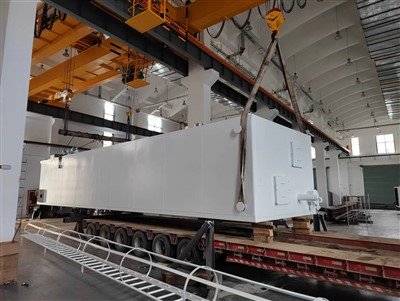
First up, I want to talk about our core work: we build modular CO2 plants that pull CO2 from industrial flue gases, ethanol fermentation, and even direct air capture (DAC) streams. But the biggest shift I’ve seen in the last 3 years is the move away from old amine-based scrubbing. Don’t get me wrong, amines were a workhorse, but they’re energy-hungry—like, 30% of a plant’s power goes to heating the solvent to release the captured CO2. Now? We’re using phase-change solvents, and let me tell you, they’re a game-changer. These solvents don’t absorb CO2 uniformly; they split into two phases once they hit a saturation point: one is CO2-rich, the other is almost solvent-free. Instead of heating the whole 10,000-gallon tank of solvent, we only heat the rich phase. That cuts energy use by 40%—no exaggeration. I’ve got a client in the Midwest that switched over last year, and their utility bills dropped by $120k in the first 6 months alone. The best part? We’re running trials with biodegradable phase solvents, so they don’t leach chemicals if there’s a minor leak. No more worrying about wastewater treatment headaches, either.
Next, direct air capture (DAC) is blowing up, but not the super expensive kind that grabs headlines. The latest twist here is sorbent-enabled DAC, specifically moisture-swing sorbents. Old DAC used solid sorbents that needed high heat (like 1000°F) to release CO2, which burned through fossil fuel or extra electricity. Now, our new sorbents grab CO2 when they’re dry, and release it when they get humid—no high heat required. Wait, that’s right: we just blow humid air over the sorbent, and the captured CO2 desorbs. We can run this on low-grade waste heat from nearby factories, like the heat from a steel mill’s exhaust that would otherwise go up the chimney. We recently set up a small DAC unit for a winery in Oregon that pulls CO2 from the air to carbonate its wine and also cuts their carbon footprint. They’re now selling “carbon-neutral sparkling wine” as a result—talk about turning a cost into a revenue stream.
Then there’s membrane tech, which has been around for decades, but it’s had a massive glow-up. Old membranes could only separate CO2 if the concentration was high (like 95% from fermentation, not the 10-15% in flue gas). Now, they’re fabricating thin-film composite (TFC) membranes with nanoscale pores that are custom-tailored to grab CO2 even from low-concentration streams. We just installed a membrane system for a chemical plant in Texas that used to use amines for flue gas CO2 capture. The membrane skips the solvent regeneration step entirely—it runs on just the pressure difference of the flue gas, so it’s maintenance-free 90% of the time, compared to amines which need weekly filter changes and solvent top-ups. The best part? The membranes last 10 years, vs. 2 years for amine solvents. That’s a huge long-term cost saver.
Wait, I can’t forget about real-time process control. A lot of plants used to run on static parameters—you set the solvent flow rate or membrane pressure once, and leave it, even if flue gas flow or concentration changes throughout the day. Now, we’re integrating AI-powered digital twins that adjust every variable in real time. Our digital twins pull live data from sensors (like flue gas composition, ambient temperature, even barometric pressure) and tweak the system to maximize CO2 purity and minimize energy use. We had a dairy client that captures CO2 from their manure digesters—those biogas streams fluctuate every few hours, depending on how much manure is being added. Before the digital twin, their CO2 purity was around 90%, which meant they had to sell it at a discount. Now, it’s consistently 99.9% pure, so they’re getting top dollar from the local beverage company that buys it for soda production. The digital twin pays for itself in 8 months, easy.
Another big one: modularization. A lot of people still think CO2 plants are these huge, custom-built behemoths that take 2 years to install. No way. We build our plants in shipping-container-sized modules, so we can ship them to the site in 2 weeks, and install them in another 6 weeks. For small businesses—like craft breweries, or regional food processing plants—that don’t have the budget or space for a custom plant, this is perfect. We just did a 10-ton-per-day CO2 plant for a microbrewery in Colorado, and they were up and running in 2 months, not 18. The old way would’ve taken so long that they missed the peak soda supply window at their local distributor. Modular also means we can scale up later—if a business grows, we just add another module, no need to tear out the whole system.
Oh, and let’s talk about utilization, not just capture. A lot of CO2 plants are just capturing and storing it (CCS), but the latest tech lets us turn that CO2 into something useful. We’ve been testing electroreduction tech that takes pure captured CO2 and turns it into ethylene, which is the building block for plastic, packaging, even textiles. Wait, but we only use renewable electricity for that electroreduction step, so the whole process is carbon-negative. A startup we work with in California is using our CO2 plant to make zero-carbon plastic bags for grocery stores—they’re actually selling the byproduct of our plant, so they’re making money off the CO2, not paying to dispose of it. That’s the key shift right now: CO2 isn’t a waste product, it’s a raw material. The latest plants are designed with utilization in mind, not just capture.
Wait, I should address the elephant in the room: reliability. A lot of operators worry that new tech is unproven. But we’re not testing random stuff in a lab—all these technologies are field-tested, with 24/7 monitoring from our team. Every plant we build comes with a 2-year on-site support contract, and we have remote diagnostics that let us fix issues before the operator even notices. Last year, one of our membrane plants in Louisiana had a small sensor glitch—our team in Texas caught it remotely in 10 minutes, no need to fly someone out. That’s the kind of support you don’t get from big, generic industrial suppliers.
Let me give you a quick example of how this all comes together. Take a corn ethanol plant—they’re one of the biggest sources of industrial CO2 in the US. A standard ethanol plant used to capture CO2 with amines at 80% purity, spend $500k a year on energy for regeneration, and sell it for $30 per ton. Our latest plant for an ethanol client uses phase-change solvents, a digital twin controller, and a membrane polishing step. It captures CO2 at 99.9% purity, cuts energy use by 45%, and sells it for $75 per ton. So instead of spending $500k a year, they save $225k, plus make an extra $225k in revenue—so $450k in net gain, all from upgrading the plant. That’s not a hypothetical, that’s a client we did last year in Iowa.
Now, I know a lot of you are thinking: “This sounds great, but is it affordable?” Let’s be real—CO2 plants aren’t cheap, but the latest tech is closing the gap. Modular plants are 20-30% cheaper than custom ones, the lower energy use cuts operational costs by half, and the higher CO2 purity means you get a better selling price. We also work with a bunch of clean energy grants that can cover up to 50% of the capital cost, so a lot of our clients end up paying for their plant in 3-4 years, not 10.
If you’re running an industrial operation that produces CO2 (fermentation, flue gas, DAC, biogas), or if you’re looking to buy CO2 for your business, this tech is going to change the game. I’ve seen so many clients go from seeing CO2 as a waste stream to their biggest revenue driver, all because we installed the latest, most efficient tech.
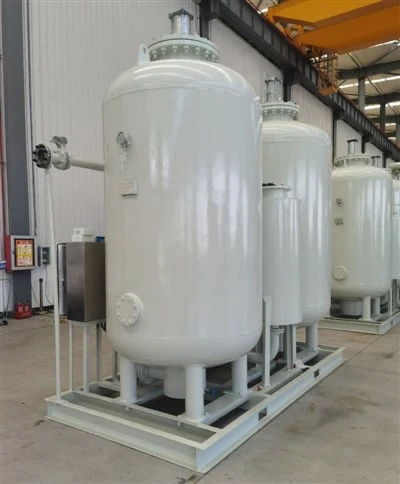
We’ve been building CO2 plants for over a decade, and we’re always testing new tech—last month we got a prototype of a carbon-negative membrane that pulls CO2 directly from low-concentration flue gas without any pre-treatment, which would cut costs even more. If you want to chat about upgrading your existing plant, or building a new one that’s efficient, reliable, and makes you money instead of costing you, hit us up. We don’t do pushy sales calls—we just show up, listen to your needs, and build something that works for you. No generic solutions, no nonsense.
Rare/Special Gas Equipment References:
- International Energy Agency (IEA). (2023). The Future of Carbon Capture, Utilisation and Storage. IEA Publications.
- U.S. Department of Energy (DOE). (2022). Phase-Change Solvents for Cost-Effective CO2 Capture. DOE Office of Fossil Energy and Carbon Management.
- National Renewable Energy Laboratory (NREL). (2023). Moisture-Swing Sorbents for Direct Air Capture: Field Trial Results. NREL Technical Report.
- Membrane Technology and Research, Inc. (2022). Thin-Film Composite Membranes for Low-Concentration CO2 Separation. MTR Industrial Solutions.
- Global CCS Institute. (2024). Modular CCUS: Scalable Solutions for Industrial Emissions. Global CCS Institute Report.
Hanturbo Technology (Zhejiang) Co., Ltd.
Hanturbo Technology (Zhejiang) Co., Ltd. is one of the most professional co2 plant manufacturers and suppliers in China, also supports custom service. We warmly welcome you to buy discount co2 plant made in China here and get quotation from our factory. For price consultation, contact us.
Address: No.118, Wangluo Road, Deqing County, Huzhou City, Zhejiang Province, China.
E-mail: andyxu@hanturbo.com.cn
WebSite: https://www.hanturbo-gas.com/
