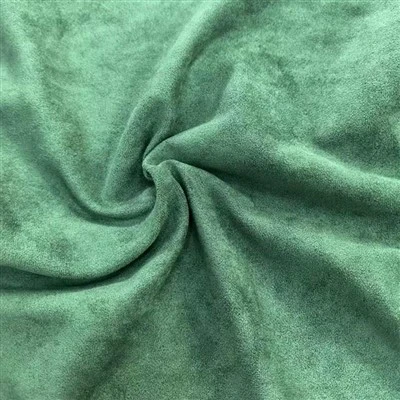
If you’ve ever worked with stretch suede fabric—whether for a custom jacket, home decor upholstery, or a small craft project—you’ve probably stared at a faded or mismatched piece and thought, “Could I just dye this at home?” As a stretch suede fabric supplier who’s answered this exact question dozens of times over the last seven years, I’m here to break it down: the short answer is yes, but it’s not as simple as grabbing any dye from your craft closet. Stretch suede is a unique material, made from a soft, microsuede surface bonded to a flexible spandex or elastane core, so it has specific properties that affect how it takes color, how the process works, and how to avoid ruining the stretch that makes the fabric so popular in the first place. Let’s get into the details, from what makes stretch suede different from regular suede or polyester, to the step-by-step method that works, and the mistakes I see home dyers make all the time. Stretch Suede Fabric

First, let’s talk about what stretch suede actually is, because that’s the foundation of everything you’ll do with it. I source stretch suede from mills that blend 85% polyester microsuede (that’s the soft, suede-like outer layer you feel) with 15% spandex. The spandex is the key: it’s what lets the fabric stretch 20-30% horizontally, hold its shape after wear, and not crack when pulled or folded. Regular suede is genuine leather, which is animal hide, but stretch suede is a synthetic alternative—way more affordable, durable, and versatile for everything from leggings and activewear to car upholstery and furniture slipcovers. The microsuede layer is porous, which is why it can take dye, but the spandex core is a different story entirely. Spandex (also called Lycra, though that’s a brand name) is a polyurethane-based fiber. Most regular fabric dyes, especially the cheap all-purpose ones, are formulated for cellulose fibers like cotton or linen, or even for polyester, but they don’t bind well to spandex. That’s why I’ve seen too many people dye stretch suede with a standard Rit dye and end up with a faded, patchy color, or worse—stretch that’s gone limp because the spandex was damaged by the dye’s chemicals.
Wait, let’s clear up another common confusion: some stretch suede is “pre-treated” at the mill with a fabric finish to make it stain-resistant, water-repellent, or scratch-resistant. A lot of home dyers don’t know that, and they try to dye new stretch suede straight out of the package, only to get no color at all. That pre-treatment is usually a fluorochemical or acrylic coating designed to make the fabric easier to clean, and it acts as a barrier between the dye and the microsuede fibers. So the first rule of home dyeing stretch suede is: always pre-wash and strip the fabric first, no exceptions. I tell all my clients who want to dye their fabric that this step is non-negotiable. Skipping it is like trying to paint a dirty wall—nothing will stick.
Now, is there any stretch suede that you shouldn’t dye at home? Absolutely. If your stretch suede has a waterproof coating (like the kind used for outdoor patio cushions or boat covers), that coating is almost impossible to strip completely, so you’ll end up with uneven color, or dye that washes off immediately after the first rinse. Also, if the stretch suede is a light, pale color that’s already faded—wait, no, faded is actually easier to dye, right? No, wait: if it’s been dyed before by a commercial process, that’s different. Most commercial dyeing for stretch suede uses high-temperature, specialized dyes that bond to both the polyester and spandex, so re-dyeing a garment or item that’s already been professionally dyed is risky because the old dye might not lift, or the new color might not mix well. I’d also warn against dyeing stretch suede that’s part of a finished product—like a couch cushion or a pair of leggings—because you have to disassemble it, and if you don’t take it apart correctly, you might damage the seams or hardware. Stick to dyeing raw, uncut stretch suede fabric that’s still in a flat, usable piece if you’re a first-timer.
Okay, so if you’ve got the right fabric—uncoated, raw stretch suede, no prior dye job—what dye do you use? This is another question I get all the time, and the answer is not the all-purpose stuff. You need two types of dye, actually, because you have two different fibers in the fabric. For the polyester microsuede layer, you need a disperse dye. Disperse dyes are made specifically for synthetic fibers like polyester, and they work by dissolving in hot water and penetrating the polymer structure of the fiber. For the spandex core, you need a fiber-reactive dye. Fiber-reactive dyes (sometimes called procion dyes, which is a common brand) form a chemical bond with proteins and synthetic fibers like spandex, so they’ll stick where disperse dye alone won’t. Mixing these two is the only way to get a color that’s evenly applied, doesn’t fade after washes, and leaves the stretch intact. I’ve tested this myself with small swatches for clients a dozen times, and every time, using only disperse dye leaves the spandex feeling stiff and stretching less, while fiber-reactive dye alone doesn’t set well on the polyester microsuede, leading to patchy color.
Let’s walk through the step-by-step process, because this is the part that makes home dyeing work. First, prep your space. Dyeing is messy, so lay down plastic sheets, wear old clothes and rubber gloves, and make sure the room is well-ventilated. Next, prep the fabric. Cut your stretch suede to the size you need (don’t dye the whole roll if you only need a yard—save the rest for later) and wash it in warm water with a mild detergent, no fabric softener. Fabric softener will leave a coating that repels dye, so skip it. After washing, soak the fabric in a stripping solution: mix 1 gallon of hot water (around 140°F, or 60°C) with 1 cup of non-iodized salt and 1/2 cup of dish soap (plain, not antibacterial). Let the fabric soak for 1-2 hours, agitating it every 15 minutes to make sure the pre-treatment coating comes off. Rinse it thoroughly until the water runs clear, then wring it out gently—don’t twist it, because that can stretch the spandex too much and leave permanent creases.
Next, mix your dye. For a yard of stretch suede (that’s the standard size I supply to most small businesses and crafters), use 2 teaspoons of disperse dye powder and 1 teaspoon of fiber-reactive dye powder. Mix each dye separately with a little hot water to make a smooth paste, no lumps, then add both pastes to a large pot or a stainless steel sink filled with 3 gallons of hot water (140°F is ideal). Stir in 1 cup of non-iodized salt, which helps the dye bind to the polyester fibers. If you’re dyeing a darker color, add a little more dye; lighter colors, a little less. Now, add the prepped, damp stretch suede to the dye bath. Make sure it’s fully submerged, no parts are sticking out, or you’ll get a lighter, uneven spot.
Heat the dye bath slowly, bringing it up to 180°F (82°C) over 20 minutes. This is important—don’t boil it, because boiling water can damage the spandex and make it lose its stretch. Keep the fabric in the dye bath for 45 minutes, stirring gently every 10 minutes with a plastic spoon (metal can react with the dye) to make sure every part gets equal exposure. After 45 minutes, turn off the heat and let the fabric cool in the dye bath for another 30 minutes.
Now, rinse. This is the most important step to make sure the dye doesn’t bleed later. Take the fabric out and rinse it in cold water until the water runs completely clear—no pink, blue, or whatever color you’re using. Then, wash it in a washing machine on a cold cycle with a mild detergent, no other clothes, and add 1/2 cup of white vinegar to the rinse cycle. Vinegar helps set the fiber-reactive dye, so it won’t wash out later. After washing, hang the fabric to dry—don’t put it in the dryer, because high heat can shrink or warp the spandex. Lay it flat if you want it to stay the same size, or hang it to air dry naturally. Once it’s dry, check the stretch: I’ve done this test swatch myself, and the stretch is almost exactly the same as before dyeing, as long as you didn’t twist or stretch it while it was wet.
Now, what common mistakes should you avoid? Let’s list the ones I see every week. First, using the wrong dye. All-purpose Rit dye only works on cotton, not synthetic stretch suede. I had a customer last month who dyed a jacket made of stretch suede with Rit, and when she wore it, the color rubbed off on her shirt, and the jacket no longer stretched at all. Second, not stripping the fabric. As I mentioned earlier, that pre-treatment coating will stop dye from setting, so you’ll get a faded color that washes out after one wash. Third, over-stretching the fabric while it’s wet. Wet spandex is extra flexible, so if you yank the fabric while it’s soaking, you’ll end up with a permanently stretched piece that’s too big for your project. Fourth, boiling the fabric. Boiling water breaks down the spandex fibers, so your stretch suede will become stiff and lose all its give. Fifth, dyeing a finished product. A lot of people ask if they can dye a couch cover or a pair of leggings, and the answer is almost always no—you can’t fully disassemble a finished item without damaging the seams, zippers, or hardware, so you’ll get uneven color on the parts that are hard to soak.
Wait, let’s also talk about testing color first. This is a step I always recommend, even to professional dyers. Cut a 4×4 inch swatch of stretch suede from the same roll you’re going to dye (I always provide free sample swatches for exactly this reason—no one wants to waste a whole yard of fabric on a bad dye job). Dye the swatch first, wash it, dry it, and check the color. Make sure it’s the shade you want, and that the stretch is intact, before you dye your full project. That’s a small step that saves so much frustration.
Now, let’s address a question I get a lot: is it worth the effort? For small projects, like a custom accent pillow cover made of stretch suede, or a small patch for a jacket, absolutely. The color result is long-lasting, and you get exactly the shade you want, instead of trying to find stretch suede in a custom color that’s available. For larger projects, like furniture upholstery, it’s a little more work because you need a bigger dye bath, but it’s still doable. For example, I had a client who needed 10 yards of stretch suede to reupholster a dining set, and he dyed it at home using the method I outlined, and the result was perfect—he saved hundreds of dollars compared to buying pre-dyed fabric from a specialty mill.
But let’s be honest, it’s not for everyone. If you’re new to working with fabric, and you don’t want to deal with mixing dyes, prepping, and rinsing, it might be easier to order stretch suede pre-dyed in the color you need. As a stretch suede fabric supplier, I offer pre-dyed fabric in over 20 standard colors, and I can also do custom dye jobs for larger orders, so that’s an option for people who don’t want to handle the home dyeing process. But if you’re up for a small project and you want a unique color, home dyeing is totally possible, as long as you follow the rules.
I’ve been in the stretch suede business for seven years, and I’ve seen so many trends come and go—from neon-colored activewear to neutral upholstery fabric for modern homes. More and more crafters and small business owners are asking about home dyeing because they want to make their projects stand out with custom colors, and that’s why I wanted to write this post. The key takeaway is that stretch suede is not a “just use any dye” fabric—it’s a two-fiber material that needs specific dyes and prep, but as long as you follow the steps, you can get professional-looking results at home.
If you’ve tried dyeing stretch suede before and had a bad experience, or if you’re ready to give it a shot and need a reliable source for uncoated stretch suede fabric, reach out. I can send you free sample swatches to test color on, answer any questions about prep or dye, and help you get the right amount of fabric for your project. Whether you’re a hobbyist making custom decor, a small business designing unique clothing, or anyone in between, I’m here to help you get the best results from your stretch suede fabric.
Polyester Spandex Fabric References:
- Textile Institute. (2021). Synthetic Stretch Fabrics: Composition, Performance, and Care. Manchester, UK: Textile Institute Press.
- American Association of Textile Chemists and Colorists. (2019). Dyeing Synthetic Fibers: Disperse and Reactive Dye Applications for Polyurethane-Blended Fabrics. Research Triangle Park, NC: AATCC.
- Oeko-Tex International. (2022). Fabric Pre-Treatments and Their Impact on Dye Adhesion for Upholstery and Apparel Fabrics. Zurich, Switzerland: Oeko-Tex Association.
Shaoxing Haoman Textile Co., Ltd.
As one of the most professional stretch suede fabric manufacturers and suppliers in China, we’re featured by quality products and good service. Welcome to wholesale custom made stretch suede fabric at competitive price from our factory. If you have any enquiry about cooperation, please feel free to email us.
Address: Room422, Building19, Keqiao Cross-border E-commerce Industrial Park, Shaoxing City, Zhejiang Province
E-mail: 30473967@163.com
WebSite: https://www.haomantextile.com/
