As a supplier of Polyester Tow, I’ve witnessed firsthand the profound impact of the spinning process on the quality of our product. Polyester Tow, a staple in the textile industry, finds its way into a multitude of applications, from clothing to industrial materials. The spinning process is the heart of Polyester Tow production, and understanding its effects on quality is crucial for both manufacturers and end – users. Polyester Tow

The Basics of Polyester Tow Spinning
The spinning process of Polyester Tow involves transforming polyester polymer chips into continuous filaments. There are two main types of spinning methods commonly used in the industry: melt spinning and solution spinning. Melt spinning is by far the most prevalent method for Polyester Tow production due to its efficiency and cost – effectiveness.
In melt spinning, the polyester chips are first heated to a molten state. This molten polymer is then forced through a spinneret, a device with numerous tiny holes. As the molten polymer is extruded through these holes, it forms fine filaments. These filaments are then rapidly cooled by a stream of air or water, solidifying them into continuous threads. The cooled filaments are then drawn, which aligns the polymer chains within the filaments and enhances their strength and orientation.
Impact on Physical Properties
1. Tensile Strength
One of the most significant effects of the spinning process on Polyester Tow quality is its influence on tensile strength. During the drawing stage of the spinning process, the polymer chains in the polyester filaments are aligned in the direction of the draw. This alignment increases the intermolecular forces between the chains, resulting in a significant increase in tensile strength.
The speed and ratio of drawing are critical factors in determining the final tensile strength of the Polyester Tow. Higher draw ratios typically lead to higher tensile strengths, as more chain alignment occurs. However, there is a limit to the draw ratio. If it is too high, the filaments may break during the drawing process, leading to a decrease in the overall quality of the Polyester Tow.
2. Elongation at Break
Elongation at break is another important physical property of Polyester Tow. It measures the amount of stretching a tow can undergo before it breaks. The spinning process can have a direct impact on this property.
During the cooling phase of the spinning process, the rate of cooling affects the crystallization of the polyester polymer. A faster cooling rate results in a smaller degree of crystallization, which generally leads to higher elongation at break values. This is because less – crystalline polymers are more flexible and can be stretched to a greater extent before breaking.
3. Fiber Diameter
The diameter of the individual fibers in the Polyester Tow is also determined during the spinning process. The size of the holes in the spinneret plays a primary role in setting the initial diameter of the extruded filaments. Smaller spinneret holes produce finer filaments.
However, the drawing process can further modify the fiber diameter. As the filaments are drawn, they become thinner, and their diameter decreases. Controlling the fiber diameter is essential for maintaining the desired quality of the Polyester Tow. For example, finer fibers are often preferred in applications where softness and comfort are required, such as in clothing.
Impact on Chemical Properties
1. Crystallinity
The spinning process has a profound effect on the crystallinity of the Polyester Tow. Crystallinity refers to the degree of order in the arrangement of polymer chains within the fibers. During the cooling and drawing stages of the spinning process, the polymer chains have an opportunity to align and form crystalline regions.
A higher degree of crystallinity generally results in better mechanical properties, such as higher tensile strength and lower elongation at break. However, it can also affect the chemical resistance of the Polyester Tow. Highly crystalline fibers are more resistant to chemicals because the ordered structure of the polymer chains makes it more difficult for chemical molecules to penetrate the fiber.
2. Surface Chemistry
The spinning process can also influence the surface chemistry of the Polyester Tow. For example, some spinning processes may involve the use of additives or coatings to improve the properties of the Tow. These additives can modify the surface energy of the fibers, affecting their wettability and adhesion properties.
A better – controlled spinning process can ensure a more uniform distribution of these additives on the fiber surface, leading to more consistent surface properties across the entire Polyester Tow product. This is crucial in applications where good adhesion or wettability is required, such as in composite materials.
Impact on Appearance
1. Luster
The luster of Polyester Tow, which refers to its shine or gloss, is affected by the spinning process. The surface smoothness of the filaments, which is determined during the spinning and cooling stages, plays a major role in the luster of the Tow.
Smoother filament surfaces reflect light more uniformly, resulting in a higher luster. Factors such as the spinning speed, the quality of the spinneret, and the cooling conditions can all influence the surface smoothness of the filaments. For example, a spinneret with well – polished holes can produce filaments with smoother surfaces, leading to a more lustrous Polyester Tow.
2. Color and Color Fastness
In the case of dyed or colored Polyester Tow, the spinning process can also impact the color and color fastness. The spinning conditions can affect the porosity of the filaments, which in turn affects the dye – uptake and color fastness.
Filaments with a higher degree of porosity can absorb more dye, resulting in a more intense color. However, if the porosity is too high, the dye may not be firmly held within the fibers, leading to poor color fastness. Proper control of the spinning process, including the temperature, pressure, and drawing conditions, can help optimize the porosity of the filaments and ensure good color and color fastness.
Quality Control in the Spinning Process
To ensure the high quality of Polyester Tow, strict quality control measures must be implemented throughout the spinning process. Regular monitoring of process parameters such as temperature, pressure, spinning speed, and draw ratio is essential. Any deviation from the optimal values can lead to a decrease in the quality of the product.
In – process testing is also crucial. This includes testing the physical and chemical properties of the Polyester Tow at various stages of the production process. For example, tensile strength and elongation at break can be measured using a universal testing machine, while crystallinity can be analyzed using techniques such as differential scanning calorimetry.
Conclusion
In conclusion, the spinning process has a far – reaching effect on the quality of Polyester Tow in terms of physical, chemical, and appearance properties. As a Polyester Tow supplier, we understand the importance of optimizing the spinning process to produce high – quality products that meet the diverse needs of our customers.
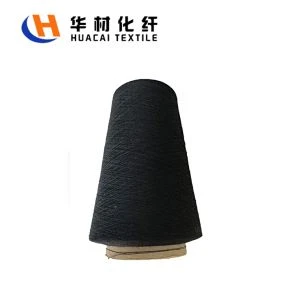
By carefully controlling the spinning process parameters and implementing strict quality control measures, we can ensure that our Polyester Tow has the desired tensile strength, elongation at break, fiber diameter, crystallinity, luster, and color fastness. This not only improves the performance of the end – products but also enhances customer satisfaction.
Polyester Tow If you are looking for a reliable Polyester Tow supplier, we invite you to contact us to discuss your specific requirements. Our team of experts is ready to provide you with detailed information and assist you in making the best choice for your application.
References
- Mohamed M. El – Nemr. "Polymer Processing: Principles and Applications." Elsevier, 2019.
- John A. Manson, Leslie H. Sperling. "Polymer Blends and Composites." CRC Press, 2004.
- Howard S. Katz. "Handbook of Polyester Fibers: Technology, Process, Performance, Applications." William Andrew, 2009.
Huacai Group
Huacai Group is well-known as one of the leading polyester tow manufacturers and suppliers in China, featured by quality products and good service. Please feel free to buy bulk polyester tow at competitive price from our factory.
Address: No.188 Zhenyang Road, Qingyang Town, Jiangyin City, Jiangsu Province, China
E-mail: sales@huacaifiber.com
WebSite: https://www.huacaifiber.com/
