If you’re here, odds are you’re either a owner-operator stuck on the side of the highway with some weird electrical gremlins in your semi-trailer, or a fleet manager dealing with a whole fleet throwing random light codes at you. I’ve been in this game for 12 years, working semi-trailer electricals every single day—fixing them on the side of I-80, troubleshooting for new owner-operators who didn’t realize their 2024 reefer’s control panel was gonna throw a fit in Wyoming cold, and training techs at our shop. Let me tell you: electrical problems in semi-trailers are almost never the big, scary “blown transformer” stuff. They’re dumb, avoidable, and 9 times out of 10 you can fix ’em without calling a tow that’ll cost you $800 just to hook up. Semi-Trailer

First, let’s get one thing straight: I’m a semi-trailer supplier, so I see every kind of electrical nightmare. The guy who skipped pre-trip because he was running late to a load? His trailer’s clearance lights were shorting because a chicken wire fence tore a wire loose that was rubbing against the frame. The fleet that bought cheap aftermarket brake controllers? They were causing random ABS faults that tripped on dry pavement at 60 mph. The biggest mistake I see folks make is jumping to the hardest, most expensive fix first. You don’t yank the reefer unit’s control board until you’ve checked 3 dumb, free stuff first.
Let’s walk through this step by step, like I’d walk a new tech through it while we’re waiting for a parts truck. Start with the basics—no fancy multimeters (though a cheap one is non-negotiable) until you’ve eliminated the lazy stuff.
First up: the 7-way connector. That’s the adapter that links your tractor to your trailer, right? Most electrical problems start here, not in the trailer itself. Think about it: this thing gets beat up every single trip. It’s exposed to rain, snow, road salt, mud, rocks flying off the trailer tires. I’ve seen 7-ways so corroded you could barely plug them in—white, chalky buildup on the pins that blocks current. Or, even dumber, a pin bent at a 90-degree angle because the driver hooked up wrong. Last month, a guy called us panicking because his trailer’s right turn light wasn’t working, and it turned out the 7-way pin for right turn was bent. He just used a flathead screwdriver to bend it back, and he was on his way in 2 minutes. Another quick check for the 7-way: wiggle test. With your ignition on (tractor side, not just trailer), wiggle the connector every which way. If a light flickers or the ABS beeps, you’ve got a loose or corroded pin. Don’t just spray WD-40 on it—wait, actually, WD-40 works short-term, but get electrical contact cleaner and a small wire brush, scrub the pins until they’re shiny, then plug it in tight. That fixes more problems than any module swap.
Next: ground points. Semi-trailers run on DC power, which means every circuit needs a good, solid ground. A lot of folks forget that ground is just as important as power. Where do trailers ground? Usually the frame, near the 7-way connector, near the rear lights, and near the reefer unit. These ground points get dirty, rusty, covered in road gunk. If the ground is bad, power can’t flow right—so your brake lights might be dim, your ABS might kick on for no reason, your reefer might not cool evenly. How to check this? Grab your multimeter, set it to DC volts, touch the positive lead to a known good power source (like the positive post on your trailer battery, if you’ve got a reefer or a standalone battery), and touch the negative lead to the frame ground point. If you get less than 12 volts (or whatever your system is—most are 12V, some reefers are 24V), that ground is shot. Scrape off the rust and dirt with a wire brush, maybe add a small self-tapping screw to make a better connection, and you’re golden. I once fixed a whole fleet’s intermittent ABS faults just by tightening 17 ground points that were loose from rough highway driving. That’s how stupid simple this stuff is.
Now, if the 7-way and ground check out, move to the specific circuit you’re having issues with. Let’s break down the most common trailer electrical problems: lighting (turn signals, brake lights, clearance lights), ABS faults, and reefer unit issues. Those three make up 90% of the calls I get.
For lighting problems: if only one light is out, skip the whole trailer check. That’s almost always a blown bulb. Duh, right? But you’d be shocked how many people yank the whole light assembly before checking the bulb. If all lights on one side are out, go back to the 7-way—same pin for that side, so a bad pin is the culprit. If some lights on the side work and some don’t, it’s a broken wire in the harness. Trailer harnesses run along the frame, secured with zip ties or clips. Over time, those clips break, so the wire hangs down and gets chewed by rocks or rubs against the frame until it frays and shorts. How to check this? Follow the wire from the light back to the frame. If it’s loose, run your hand along it while the light is switched on. If it flickers, you found the break. Or, use your multimeter on continuity setting: touch one lead to the light’s power pin, the other to the wire all the way back. If it doesn’t beep when you move to a spot, that’s the break.
ABS faults are the next big one. I see this every week. First, if your tractor is throwing an ABS code like “wheel speed sensor fault,” don’t run out and buy a $500 new sensor yet. Start with the basics: clean the sensor and the tone ring that’s on the axle hub. Dirt, metal shavings, brake dust build up on the sensor tip, so it can’t read the tone ring’s teeth. That’s super common if you run in a lot of stop-and-go delivery. Jack up the wheel, pull the sensor out, wipe all the gunk off with a rag and contact cleaner, then stick it back in. Also, check the wiring harness for the ABS sensor—same thing as lighting: it runs along the axle, gets chewed by road debris. A friend of mine had a ABS light on that stayed on for 6 months, and it was just a wire that had rubbed through against the axle, causing a short. Taping it up and putting a new zip tie on fixed it. Last thing for ABS: make sure the sensor is tightened to the manufacturer’s spec. Too loose, and it moves away from the tone ring, so it can’t pick up speed. Too tight, and you’ll strip the threads or crack the sensor. 5 to 7 ft-lbs is standard, so don’t crank on it like you’re tightening a lug nut.
Then there’s reefer unit electrical problems. If your reefer is not holding temperature, or throwing error codes like “low voltage” or “communication fault,” again, start simple. First, check the battery that powers the reefer. A lot of owner-operators run their reefer off the tractor’s battery while idling, but if the alternator is bad, or the battery is old, it’ll put out too low voltage. Use your multimeter—with the reefer running, it should put out at least 12.5V (or 25V for 24V reefers). If it’s lower, charge the battery or replace it. Also, check the wiring between the reefer’s control panel and the main unit. Reefers get shaken around a lot, so wires can come loose from the connectors inside the control box. I once had a customer whose reefer dropped 10 degrees overnight, and it was just a connector pin that had worked loose from the vibration of driving down the highway. He just popped the control panel off, pushed the pin back in, and it was good. If you’re getting a communication error between the tractor and the reefer, that’s usually the 7-way pin for the reefer circuit—go back to that first, don’t mess with the reefer’s internal computer until you’ve checked the basics.
Wait, let’s talk about a super common mistake: aftermarket parts. A lot of folks install cheap brake controllers, LED light kits, or even cheap aftermarket reefer parts, and that’s where the electrical gremlins start. I see this all the time. Our trailers are engineered to work with specific parts—specific 7-ways, specific wiring gauges, specific sensor types. If you buy a $20 LED light kit from a random online store, and it uses a thinner wire than the factory one, that wire’ll get hot, melt insulation, and cause a short. Or if you buy a brake controller that’s not calibrated for your trailer’s brake size, it’ll cause random ABS faults that make you think your axle is bad. I’m a semi-trailer supplier, so I tell every customer: save yourself the headaches, stick with OEM-approved parts, or parts that are made specifically for semi-trailer electrical systems, not passenger car stuff. That LED light kit that works for your Ford F-150? It’s probably not gonna work right on your trailer, which has different voltage spikes and vibration levels.
Also, pre-trip inspections! This is non-negotiable. Every single time you hook up to a trailer, spend 5 minutes checking the basics. Wiggle the 7-way, check the ground points, tap the brake lights to make sure they work, do a quick once-over of the wiring harnesses. Last year, a driver skipped pre-trip, and his trailer’s brake line was leaking, but he missed that until he was on I-40 going 70, and he had to slam on his brakes to avoid a semi. But even smaller: a quick pre-trip would have caught a loose wire that caused his right turn light to fail, which would have prevented a $150 ticket in Arizona. Most electrical problems are preventable if you just take 5 minutes every day to check the stuff that’s easy to get to.
Wait, let’s talk about when you should actually call a pro. I’m not gonna lie—if you’ve checked all the basic stuff, and the problem is still there, don’t start yanking modules and spending thousands of dollars. For example, if you’ve checked the 7-way, grounds, bulbs, sensor wiring, and you’re still getting random ABS codes, that might be a bad ABS control module, which is more technical. Or if your reefer is throwing a specific error code that’s not covered in the manual, like a compressor communication fault, that’s when you need a tech who knows reefer systems, not just trailer lights. Also, if you’re dealing with something that’s under warranty—our trailers have a 5-year warranty on electrical systems, so if something’s failing within that time, we’ll cover parts and labor, no questions asked. But even then, most of the time, it’s the dumb stuff that anyone can fix.
Let me give you a real example that happened to a customer of mine last month. He’s an owner-operator, runs produce loads out of Texas, so his reefer is his life. He called me at 2 a.m., stuck on the side of I-35, his reefer was saying “low voltage” and the temperature was creeping up to 50 degrees. I talked him through the steps over the phone: first, check the 7-way. He said it looked fine, but I told him to wiggle it anyway—he wiggled it, and the voltage jumped back up to normal. Turned out, the pin in the 7-way for the reefer had gotten corroded from the rain that day. He had contact cleaner in his toolbox, cleaned the pins, and he was back on the road in 10 minutes, saving his $12,000 produce load. That’s not some fancy fix—that’s the first step I told every new driver to learn.
Another thing: invest in a good multimeter. You don’t need the $200 professional one, but a $20 multimeter from AutoZone or Amazon will do everything you need. Learn how to use the continuity setting, the DC voltage setting, and you’ll troubleshoot 90% of electrical problems yourself. I see folks skipping this step all the time, guessing at what’s wrong, and wasting hours when they could just use a multimeter to find a loose wire or a bad ground in 2 minutes.
Now, let’s wrap this up, because I know you’re here because you’re dealing with a problem right now, not a textbook. The big takeaway: always start with the dumb, free, easy stuff first. 7-way connector, ground points, bulbs/fuses, check for loose wires, clean corrosion. Then move to the specific circuit—lighting, ABS, reefer. If that doesn’t work, call a pro, especially if it’s under warranty. And for the love of all that’s holy, don’t use passenger car parts on a semi-trailer.
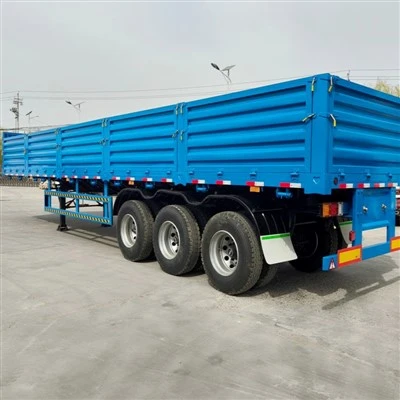
If you’re a fleet manager looking to reduce downtime on your trailer electricals, or an owner-operator in the market for a new semi-trailer with reliable electrical systems that won’t leave you stranded on the highway, we’ve got you covered. We engineer all our trailers with heavy-duty wiring, corrosion-resistant connectors, and OEM-grade electrical components, and our team is here to help with any troubleshooting questions, warranty claims, or parts needs. Don’t let electrical gremlins derail your next load—reach out to our team to chat about your trailer needs, or get help troubleshooting that stubborn issue.
Cargo Truck References:
- North American Trailer Manufacturers Association. (2022). Semi-Trailer Electrical System Troubleshooting Guide. NATM.
- Technology and Maintenance Council. (2021). Recommended Practice RP 1200: Heavy-Duty Vehicle Electrical System Maintenance. American Trucking Associations.
- Carrier Transicold. (2023). Independent Reefer Unit Electrical Troubleshooting Manual. Carrier Global Corporation.
Jining Dafu Machinery Sales Co., Ltd.
As one of the most professional semi-trailer suppliers in China, we’re featured by quality products and low price. Please rest assured to wholesale bulk cheap semi-trailer from our factory. We also accept customized orders.
Address: Room 1-115, Building 7, Luxinan Auto Parts City, Qiantongdian Village, Quanpu Town, Liangshan County, Jining City, Shandong Province
E-mail: jiningdafu@163.com
WebSite: https://www.dafumachinery.com/
