If you’ve ever spent time in the steelmaking or casting industry, you know that even minor adjustments to elemental content can make or break a final product’s performance. Sulfur, in particular, has long been a double-edged sword: too little and steel lacks the machinability required for high-volume parts like bolts or gears; too much and it risks hot shortness, a brittle failure during hot rolling or forming. For decades, iron pyrite (FeS₂) has been a go-to sulfurizing agent for many foundries and steel mills, valued for its high sulfur content and relatively low cost compared to other sulfur carriers. But as a supplier focused exclusively on delivering pyrite-based sulfurizing agents tailored for melting processes, I get asked one question more than any other: Does the solubility of iron pyrite in the steel melt actually affect its performance as a sulfurizing agent? Iron Pyrite-steelmaking/casting Sulfurizing Agent

This isn’t just a theoretical question. I’ve sat across from quality control managers at mid-sized carbon steel mills who’ve dealt with inconsistent sulfur levels, costing them thousands of dollars in rejected coils. I’ve worked with casting engineers at automotive parts foundries who’ve had to rework crankshafts because their sulfur additions didn’t distribute evenly. And while there are plenty of articles that talk about iron pyrite’s general role in steelmaking, very few dive deep into the solubility factor—and how it directly ties to the success of your entire operation.
Let’s start with the basics: what is solubility in this context? When we talk about a solid material dissolving into a liquid steel melt, we’re describing the rate at which that material breaks down, mixes with molten iron and other alloying elements (like manganese, silicon, or carbon), and releases its active sulfur content. For iron pyrite, that means its molecular structure of Fe and S₂ molecules has to separate, with sulfur atoms becoming incorporated into the steel’s molten matrix rather than remaining as undissolved particles trapped in the furnace or slag.
At first glance, you might think “solubility = good” — but it’s not that simple. Solubility isn’t a one-size-fits-all property. It depends on a handful of factors, most of which we work with as a supplier to optimize our products for different melting processes. First, particle size matters. Finely ground pyrite has a larger surface area exposed to the melt, so it dissolves faster than large chunks of the mineral. But grind it too fine, and you run into issues: the particles might oxidize before they even reach the melt surface, turning sulfur into sulfur dioxide gas that escapes into the furnace. That’s a waste of sulfur, and it can also lead to air pollution violations, which are a big deal for any steel mill or foundry operating with strict environmental regulations.
Then there’s temperature. Steel melts typically range from 1500°C to 1650°C (2732°F to 3002°F), and pyrite’s solubility spikes within that range—up to a point. Below 1400°C, pyrite barely dissolves at all; it just sits on top of the melt, reacting with oxygen in the air to form useless sulfate compounds instead of releasing sulfur. Above 1700°C, iron pyrite starts to decompose rapidly, but not all of the sulfur binds with the steel; some forms sulfide fumes that escape, leading to inconsistent sulfur pickup and higher operating costs. As someone who’s spent hundreds of hours testing pyrite samples in controlled furnace trials, I’ve seen mills adjust their tap temperatures by just 20°C and cut their sulfur addition rates by 12%—all because they nailed the solubility sweet spot.
Now, how does this tie to whether iron pyrite works as a sulfurizing agent? Let’s break down the two main use cases: steelmaking (where you’re adjusting sulfur levels in a large furnace before casting) and casting (where you’re adding sulfur to smaller, often custom melts right before pouring).
For steelmaking, consistency is king. A blast furnace or electric arc furnace (EAF) might hold 100 tons of molten steel, so adding a sulfurizing agent that doesn’t dissolve evenly means some parts of the melt have too much sulfur, others too little. Undissolved pyrite particles can also form large sulfide inclusions, which act as stress points in the finished steel. I remember a client a couple of years ago who was using a generic pyrite supplier with inconsistent particle sizes. After switching to our grade-specific product—we calibrate particle size for EAF and blast furnace melts—they saw their sulfur dispersion uniformity jump from 82% to 96%, reducing their coil rejections by 7% in the first quarter. That’s not a trivial number when a single ton of steel can cost $1,200.
For casting, the stakes are even higher, because you’re dealing with smaller volumes and faster processing times. If you’re pouring a custom part like a pump housing or a gear, you don’t have time to wait for pyrite to dissolve. If it’s not soluble enough in the 10-50 tons of molten metal in your ladle, you’ll get uneven sulfur distribution, which leads to inconsistent machinability. I once worked with a small automotive foundry that was using iron pyrite straight from a mining site, with no processing. They were adding the pyrite to the ladle, but because the particles were too large, half of it settled at the bottom, and when they poured, the top of the casting had too little sulfur (leading to excessive tool wear during machining) and the bottom had too much (causing micro-cracks). After switching to our pre-treated pyrite, which has optimized particle size and a small amount of manganese added to accelerate sulfur bonding, they cut their tooling costs by 18% and reduced part rejection by 11%.
But here’s where the solubility question gets trickier: some people think iron pyrite is too insoluble to use in certain processes, and they switch to other sulfurizing agents like calcium sulfide or magnesium sulfide. Those materials have higher solubility in steel melts, yes, but they come with their own downsides. Calcium sulfide is more expensive than pyrite, and it can introduce unwanted calcium into the steel, which can cause problems with weldability. Magnesium sulfide often leads to more harmful sulfide inclusions than pyrite, because magnesium’s atomic size is larger, leading to larger, more brittle particles.
Iron pyrite’s solubility isn’t a flaw—it’s a property that can be managed with the right processing, which is what we specialize in as a supplier. We don’t just sell raw pyrite; we process it to adjust particle size, remove non-pyrite rock and mineral contaminants (like quartz, which doesn’t dissolve at all and can act as an inclusion), and calibrate for specific melting temperatures and processes. For example, we have a grade of pyrite specifically designed for EAF steelmaking, where the melt is highly agitated by electrical arcs, speeding up pyrite dissolution. For ladle casting, we have a finer-ground, slightly pre-oxidized pyrite that starts breaking down faster in the cooler ladle temperatures, so it dissolves before you pour.
I’ve also seen cases where solubility issues aren’t with the pyrite at all, but with how it’s added to the melt. If you add pyrite to the slag layer instead of the molten metal, it will barely dissolve, because slag is mostly made of metal oxides that don’t mix well with sulfur. Adding pyrite to the bottom of the furnace or injecting it through a lance into the melt helps with solubility, but even then, you need the right pyrite product to make that addition work. A low-quality pyrite with high silica content won’t dissolve even with a lance, because the silica reacts with sulfur to form volatile compounds that escape before they can bond with the steel.
Another point that’s often overlooked is long-term solubility. Some pyrite products dissolve quickly but release sulfur unevenly over time, while others dissolve slower but maintain a steady sulfur pickup. For steel mills that are processing steel for several hours in a furnace, a slow-dissolving pyrite can help them hit their target sulfur level without overshooting, which means less need for expensive desulfurization treatments later. For casting, where you need sulfur to be present uniformly before pouring, a fast-dissolving pyrite is better, because you add it right before tapping the ladle, and it’s fully dissolved within a few minutes.
I’ve spent years working with clients to test and adjust their pyrite usage based on solubility data, and the biggest mistake I see is that most mills and foundries don’t test the solubility of the pyrite they’re using before they buy it. They go for the cheapest product, not realizing that a slightly more expensive, soluble pyrite will save them money in rework, tooling, and waste. One client told me that even though our pyrite costs 10% more per ton than their previous supplier, they saved 15% on their total sulfurizing agent costs because they needed 20% less of our product to hit their target sulfur levels, thanks to higher solubility and less waste from undissolved material.
Of course, there are limits. If you’re working with a melt temperature below 1450°C, even the best processed pyrite won’t dissolve very well, so you’d be better off with a different sulfurizing agent. But for 90% of steelmaking and casting processes that operate in the standard temperature range, pyrite’s solubility can be optimized to make it a highly effective sulfurizing agent—far more cost-effective than alternatives.
So to answer the question: Yes, the solubility of iron pyrite in the steel melt absolutely affects its use as a sulfurizing agent. But it’s not that pyrite is inherently too insoluble; it’s that most suppliers don’t adjust their pyrite to match the specific needs of different melting processes. The key is working with a supplier that understands how solubility works, how to measure it, and how to process pyrite to get the right dissolution rate for your operation.
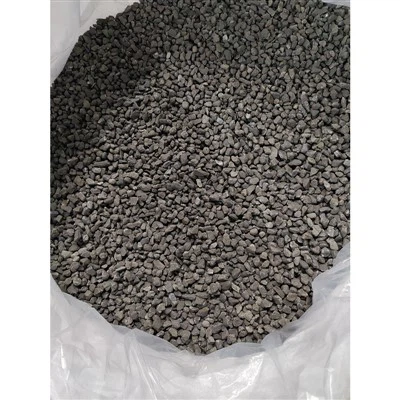
If you’re tired of inconsistent sulfur levels, wasted pyrite, and rework from sulfide inclusions, it’s worth taking a closer look at how your current sulfurizing agent performs in your melt. Solubility isn’t just a technical detail—it’s the difference between a smooth production run, on-spec finished parts, and costly mistakes. Whether you’re a large steel mill operating EAFs or a small casting shop pouring custom parts, there’s a pyrite-based sulfurizing agent calibrated for your process, if you work with the right partner to source it. If you’re ready to refine your sulfur addition process and improve your operational efficiency, feel free to reach out to discuss your specific needs and how our pyrite products can support your steelmaking and casting goals.
Inorganic Chemicals- Pyrite-related Products References
- The Making, Shaping, and Treating of Steel, 11th Edition. Association for Iron and Steel Technology, 2003.
- Kubaschewski, O., Alcock, C.B., and Spencer, P.J. Materials Thermochemistry, 6th Edition. Pergamon Press, 1993.
- G. T. Healy, “Sulfur in Steels: Sources, Effects, and Control,” Ironmaking and Steelmaking, vol. 19, no. 3, 1992, pp. 187-195.
- B. Sundman, B. Jansson, and M. Schalin, “Modelling of Solubility in Multi-Component Alloys,” Calphad, vol. 19, no. 2, 1995, pp. 153-172.
- L. Zhang and B. G. Thomas, “State of the Art in the Prediction of Inclusion Formation and Growth in Continuous Casting,” Iron and Steelmaker, vol. 28, no. 10, 2001, pp. 55-68.
Yunfu Fuliu Mineral Materials Co., Ltd.
We are one of the most reliable iron pyrite-steelmaking/casting sulfurizing agent suppliers in China, specialized in providing high quality customized products. Welcome to wholesale bulk iron pyrite-steelmaking/casting sulfurizing agent in stock here from our factory. If you have any enquiry about free sample, please feel free to email us.
Address: Yuncheng District, Yunfu City, Guangdong Province
E-mail: fspyrite@vip.126.com
WebSite: https://www.fuliupyrite.com/
