If you’ve ever shopped for an air compressor, you know the first question everyone asks after “does it actually work for my shop?” is “how much does it weigh?” I get it—showing up to a job site with something so heavy it needs two people to haul it is a total mood killer. As a Ruiqi Air Compressor supplier, I field this question literally every single week, and let me tell you, it’s not a one-size-fits-all answer, which is exactly why I’m breaking it down for you straight. No fancy jargon, no vague marketing fluff, just real, actionable stuff based on what our customers actually need. Ruiqi Air Compressor
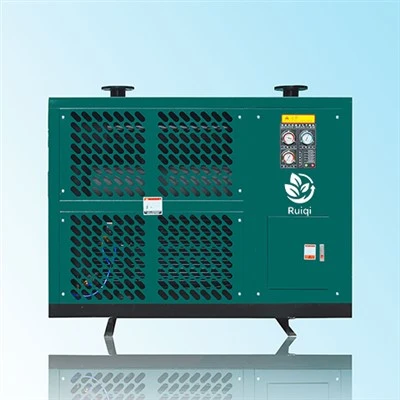
First off, let’s cut the confusion: Ruiqi doesn’t make one air compressor—we make dozens. We’ve got tiny 1-gallon pancake compressors for home garages, 60-gallon industrial workhorses for auto shops, and even big 120-gallon stationary models for manufacturing lines. Weight shifts wildly across those lines, so I can’t just say “Ruiqi compressors are X pounds” and call it a day. That would be like saying all cars weigh the same—my 2-door hatchback isn’t the same as a semi-truck, right? Same logic here.
Let’s start with the small stuff, because that’s what most DIYers and weekend warriors reach for. Our entry-level portable pancake compressors, the kind you’d use to inflate tires, run a finish nailer, or top up bike tires, weigh in at around 25 to 35 pounds. Wait, hold on—some people think pancake compressors are tiny and feather-light, but add a full tank of air and the motor, and that 25-pound number jumps if you’ve got a 6-gallon model. I’ve had customers carry that 30-pound 6-gallon one up a flight of stairs to their garage, grumbling the whole time, and that’s totally normal. If you need something even lighter for roof work or siding projects, our cordless electric Ruiqi mini compressor is only 18 pounds fully charged—game changer for jobs where you can’t plug in a wall outlet, and it’s still powerful enough for small trim jobs.
Now, move up to the mid-range models—this is where most small business owners land, like local mechanics, carpenters, and home remodelers. These are the ones with 20 to 60-gallon tanks, built to run impact wrenches, sanders, or spray paint guns. Let’s be clear: these aren’t the “carry by hand” type, so don’t get me wrong. Our 20-gallon horizontal compressor tips the scale at 110 pounds, and it’s got wheels, so you can roll it around a shop or job site, which is a must. The 40-gallon? That’s 150 pounds, and the 60-gallon vertical model we sell most to auto shops is 185 pounds. I’ve had a guy from a body shop tell me he uses a dolly for that 60-gallon Ruiqi because moving it even a few feet by hand would throw out his back, and that’s totally fair—no need to be a hero here.
Then there’s the industrial stuff, the big boys. These are for factories, construction sites, businesses running multiple tools nonstop all day long. These are stationary or semi-portable units, not something you’re rolling around with a dolly every day. Our 80 and 100-gallon stationary Ruiqi compressors weigh in at around 250 to 300 pounds, and even the semi-portable 120-gallon model, which has wheels for occasional moves, is 350 pounds. Wait, why so heavy? Because they’re built with thicker metal tanks, more powerful motors, and bigger cooling systems to handle 8-hour shifts without overheating. I had a plant manager text me last month saying their old compressor weighed 400 pounds and was a nightmare to move, so they went with our 320-pound 100-gallon Ruiqi because it was lighter and had the same CFM (that’s cubic feet per minute, by the way, the real measure of how much work it can do). That’s the kind of balance we shoot for—sturdiness without unnecessary heft.
Now, I know what you’re thinking: why does weight even matter? Is it just a vanity thing? Nope, it’s way more practical. Let’s break it down. If you’re a roofer, you can’t haul a 200-pound compressor up a ladder, so the 18-pound mini is perfect. If you’re remodeling a basement with tight stairwells, a 150-pound 40-gallon model will fit easier than a 250-pound big one. And if you’re in a permanent shop, you don’t care as much about moving it, but lighter compressors are easier to maintain—you can roll them out to clean the dust off the back or replace the air filter without calling a buddy to help. That’s a big one for shop owners who don’t have a ton of extra hands.
Also, I get people comparing Ruiqi to other brands, and I’ll be honest—we’re not the lightest out there, but we’re not the heaviest either. We build our compressors to last, so we don’t skimp on parts to cut weight. A cheap off-brand compressor might be 20 pounds lighter, but that’s because they used a thinner aluminum tank instead of steel, or a smaller motor that’ll die in a year. Our Ruiqi compressors use heavy-duty steel tanks, copper motors, and industrial-grade pumps, so the weight is part of what makes them reliable. It’s a tradeoff, and I’d rather sell you a compressor that lasts 10 years than one that’s easy to carry but craps out after 12 months.
Wait, let’s not forget about oil vs. oil-free models, because that changes weight too. Oil-lubricated compressors need the oil tank and sump, which adds a little weight—our 60-gallon oil-lubricated is 190 pounds, while the oil-free version is 175 pounds, since it doesn’t have the oil system. Oil-free is great for clean jobs like painting or furniture building, no oil mess, but they’re a bit louder and need more frequent filter changes. Oil-lubricated is better for rough jobs like framing or construction, quieter, and lasts longer with basic maintenance. So if you’re stuck between two similar models, the oil-free will be a touch lighter, but that’s a minor difference compared to tank size.
I’ve had so many customers over the years come back and say they bought a compressor based on weight alone, and it was the worst mistake. Last year, a guy came to me with a 20-pound off-brand pancake compressor he bought for his auto repair side gig, and he couldn’t even run an impact wrench for a single tire change. He had to sell it and buy a Ruiqi 30-pound 6-gallon model, which was a tiny bit heavier, but did the job. That’s the key here: weight is important, but it’s not the only factor. You need to match the compressor to your actual workload, not just how easy it is to carry home.
Let me wrap this up real simple. If you’re a DIYer doing small projects: go for the 18-35 pound mini or pancake. If you’re a small business owner with a shop or jobsite: go for the 110-185 pound mid-range with wheels. If you’re industrial, go for the 250-350 pound heavy-duty, built to run all day. And as your Ruiqi supplier, I’m here to help you pick the right one, not just sell you the biggest or lightest. No pressure, no hard sells, just straight answers.

If you’re ready to chat about which Ruiqi compressor fits your needs, hit me up. We can go over weights, CFM, tank sizes, whatever you need. I’ll even send you a spec sheet with exact numbers for every model so you can stop guessing. Don’t waste money on a compressor that’s too heavy or too light for what you actually do—let’s get you set up right.
Ingersoll Rand Air Compressor Parts References:
- Ruiqi Air Compressor Product Specifications, 2024
- Occupational Safety and Health Administration (OSHA), Material Handling Guidelines for Portable Equipment, 2023
- Automotive Service Association (ASA), Recommended Compressor Sizing for Small Repair Shops, 2022
- Construction Industry Institute (CII), Portable Equipment Weight and Maneuverability Best Practices, 2023
- Ruiqi Air Compressor Customer Maintenance Logs, 2022-2024
Suzhou Ruiqi Intelligent Equipment Co., Ltd.
As one of the most professional ruiqi air compressor manufacturers and suppliers in China, we also support custom service. As we have world-leading production equipment and strong manufacturing capabilities, we warmly welcome you to buy high quality ruiqi air compressor made in China here from our factory. Contact us for pricelist.
Address: No. 1729, Zhongshan South Road, Wujiang District, Suzhou City, Jiangsu Province, China, 16th Floor
E-mail: wts476626494@126.com
WebSite: https://www.ruiqicomp.com/
