If you’ve ever walked the floor of a power substation, sat in on a protective relay testing session, or even spent an afternoon troubleshooting a circuit breaker trip, you know how high-stakes these tasks are. As someone who’s spent the last decade supplying secondary injection relay test sets to utility teams, industrial maintenance crews, and third-party testing labs, I’ve seen firsthand how a small oversight during testing can snowball into something far more serious. Test sets like ours aren’t just pieces of equipment—they’re precision tools that simulate the exact currents, voltages, and timing signals relays will see when the grid is under stress, and that power comes with it. That’s why every safety precaution we train our customers on isn’t just a box to check on a checklist—it’s non-negotiable. Let’s break down the key safety rules I’ve seen prevent accidents, save time, and keep people safe on the job. Secondary Injection Relay Test Set

First, before you even unbox the test set or hook a single lead to a relay, you have to ground yourself and the test equipment properly. This isn’t just a lab trick—it’s a basic defense against electrical shock, static discharge, and equipment damage. Static electricity builds up fast in dry substation conditions or even heated maintenance bays, and that tiny shock can damage the microprocessors inside modern digital relays, which cost thousands of dollars to replace. I remember a customer a few years back who skipped grounding their test set and wrist strap, and a static jolt fried a brand-new relay mid-test. They wasted two days waiting for a replacement, and that could’ve been avoided with a 10-second check. Also, grounding the test set itself means making sure its power cord is plugged into a properly grounded outlet, not just a surge protector that doesn’t have a solid earth connection. Many people don’t realize that ungrounded equipment can become a live conductor if there’s a fault in the power supply, turning a $5,000 test set into a shock hazard. Our team includes that grounding verification step in every on-site training session we do, because it’s the first line of defense.
Next, never disconnect or connect test leads while the test set is energized. This sounds like common sense, but you’d be surprised how often seasoned techs cut corners when they’re crunched for time. I’ve heard stories of a technician pausing a test mid-cycle to adjust a lead, thinking the low voltage from the test set was nothing compared to the 110kV lines they work with daily. That low-voltage output, though, is measured in amps when it’s a secondary injection test—secondary relays are designed to trip on small, precise current surges, and our test sets put out exactly that. Disconnecting a lead while energized can cause an arc flash, even at test-level voltages, because the current can jump between loose terminals. It can also send a power surge back through the test set, damaging the internal amplifiers that produce the signal. We make a point to remind all our customers: if you have to move a lead, hit the stop button, turn the test set output off, and wait 10 full seconds for any residual charge in the leads to dissipate before touching anything. It’s a small pause, but it’s saved countless users from burns or worse.
Another critical precaution is verifying the test set’s output settings before starting any test. This goes beyond just checking that the voltage is set correctly—you have to confirm that the current and phase angles are matched to the relay you’re testing, and that the output is limited to the safe range for that specific unit. Digital relays, for example, have strict tolerances: setting a current 10% higher than the relay’s rating can cause it to trip incorrectly during field tests, or even damage the internal sensor over time. Back when we first launched our entry-level test set, we heard from a customer who set the output to 20A instead of the 2A required for an overcurrent relay. They ran the test for 5 minutes before realizing the mistake, and the relay’s current transformer (CT) secondary winding burned out. Now, we include a pre-test settings check tool in the test set’s software that flags mismatched settings, but we still drill into customers to cross-verify with the relay’s data sheet, not just rely on the test set’s prompts. We also train them to use the test set’s built-in current limiter, a feature we designed specifically to prevent accidental over-current surges that can harm both personnel and equipment.
Personal protective equipment (PPE) isn’t a one-size-fits-all rule—you have to match it to the test you’re running. If you’re doing a low-voltage secondary test on a control relay, basic PPE like safety glasses and non-conductive gloves might be enough, but if you’re testing a high-voltage primary relay or working near live equipment in a substation, you need full arc flash PPE rated for the voltage level of the surrounding area. I’ve seen new technicians show up to test a relay in a live substation just wearing a hard hat and work boots, thinking the secondary test is low risk. But arc flash hazards don’t only come from the lines you’re working on—they can come from the test set itself if something goes wrong, or from a mis-trip that sends a circuit breaker into a live line. Our training materials always include a section on arc flash risk assessment, advising customers to check the substation’s arc flash boundary before starting, and to update their PPE accordingly. We even mark our test sets with clear voltage and current ratings right on the chassis, so there’s no confusion about what level of protection is needed for a given job.
Wait, and what about the data and settings stored in the test set? That might seem like a random add-on, but it’s a safety issue too. Many test sets store past test configurations, and if you don’t clear old settings before a new test, you could accidentally run a high-current test on a relay that’s only rated for low currents. I had a customer last year who reused a 10A test setting from a previous relay test on a unit that only handled 2A, and it tripped the test set’s internal fuse—almost taking out the entire test set’s power supply. The fix was simple: get in the habit of resetting the test set to factory default settings before each new job, or at least double-checking that the current and voltage settings match the relay you’re working on. We built our test sets with a one-tap “pre-test reset” feature, but we still tell customers it’s their responsibility to confirm, because no piece of equipment is perfect.
Also, never work alone when conducting high-current secondary injection tests. I can’t stress this enough. When you’re testing a relay that requires 50A or more, even a small mistake can lead to serious injury. If something goes wrong—like a lead coming loose and creating an arc flash—you need someone nearby who can hit the emergency stop, call for help, or administer first aid if needed. A few years ago, a customer of ours tried to test a high-voltage relay by themselves, and a faulty lead connection caused a small fire at the test set. They were able to put it out, but they could’ve been trapped if the fire spread or if they had a medical emergency. Now, we include a “buddy system” protocol in all our on-site training, and we recommend that customers always have at least two people on the job for tests with current over 10A.
Another thing: inspecting test leads and accessories before every use. Those little red and black leads don’t look like they have much going on, but cracked insulation, frayed wires, or bent connectors can cause all kinds of problems. A frayed lead can lead to a short circuit during testing, which can send a surge back to the test set or to the relay, or create a shock hazard for the person holding it. I’ve had customers send back test sets because a bad lead caused a fault, and once we checked the lead, it had a crack that was just big enough to expose a live wire. We provide reinforced leads with our test sets, and we advise customers to replace any leads that show signs of wear, even if they look minor. We also tell them to test the continuity of each lead before connecting it to anything, just to make sure there’s no internal break that could cause a loose connection mid-test.
What about the test set’s placement during testing? A lot of people set the test set on the ground or a workbench, but if you’re working in a substation that’s dusty or has a lot of moving parts, you need to make sure it’s secured so it can’t be knocked over. If a test set falls and damages the control panel of a relay, that could lead to an unplanned outage, which is not only bad for business but also puts other personnel on site at risk. I’ve seen a test set get knocked over by a passing utility truck’s equipment, and it crushed the leads connected to a relay, causing a short that triggered a false trip on a feeder line. We recommend placing the test set on a stable, elevated surface that’s away from walkways, and using the built-in mounting points on the test set to secure it if you’re working in a high-traffic area.
Oh, and don’t forget to lock out and tag out (LOTO) the circuit you’re working on. Wait, is that part of secondary injection testing? Absolutely. Even though secondary tests are focused on the control side of a relay, you never want to have the main breaker energized while you’re working on the secondary wiring. The LOTO procedure ensures that the main power is off, so if something goes wrong with the test set, you’re not working on a live circuit. I’ve seen technicians skip LOTO because they’re only working on the secondary side, and a stray wire touched a secondary terminal that was connected to the live primary side, leading to a shock. LOTO is a basic safety rule for any electrical work, and we make sure every customer knows it applies to secondary injection testing too, no exceptions.
Now, I know some of you might be thinking, “I’ve been doing this for 20 years, I don’t need to follow all these rules.” But let’s be real: accidents don’t care how much experience you have. The most seasoned techs I know are the ones who follow every safety precaution, every time, because they’ve seen what happens when you cut corners. Our job as test set suppliers isn’t just to sell you a piece of equipment—it’s to give you the tools to do your job safely and effectively. That’s why every test set we manufacture comes with a full safety manual, and our support team is available 24/7 to answer questions about safety protocols, setup, or troubleshooting.
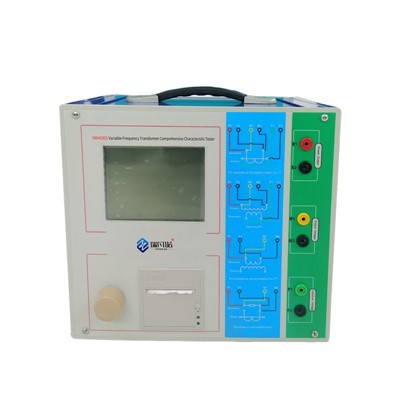
If you’re in the market for a secondary injection relay test set, or you want to upgrade your current equipment to make your testing safer and more efficient, we’d love to talk. Our team has years of experience working with utility teams, industrial maintenance crews, and testing labs, and we can help you find a test set that fits your specific needs, whether you’re testing low-voltage control relays or high-voltage substation relays. We also offer on-site training for teams that want to brush up on their safety protocols and get the most out of their test sets. Don’t take chances with safety—reach out to us to learn more about how we can support your testing needs.
Hipot Tester References
- Institute of Electrical and Electronics Engineers (IEEE) Standard C37.90.1, 2019, Relays and Relay Systems Associated with Electric Power Apparatus.
- Occupational Safety and Health Administration (OSHA) 29 CFR 1910.331-1910.335, Electrical Safety-Related Work Practices.
- International Electrotechnical Commission (IEC) Standard 60255-181, 2017, Measuring Relays and Protection Equipment – Part 181: Functional Requirements for Secondary Injection Test Sets.
- National Fire Protection Association (NFPA) 70E, 2021, Standard for Electrical Safety in the Workplace.
Refine On (Hebei) Electric Power Technology Co., Ltd.
Address: Building 13, Liandong U Valley, No.64, Jing SAN South Street, Economic Development Zone, Mancheng District, Baoding City, China
E-mail: victor@transformer-test.com
WebSite: https://www.transformer-test.com/
