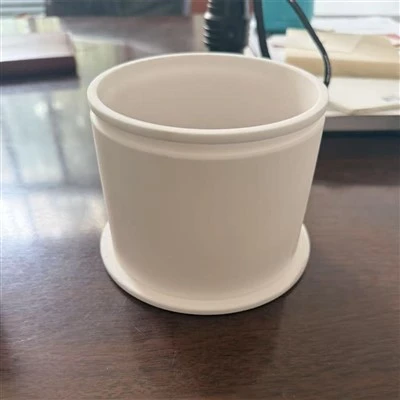
As a dedicated supplier of Alumina Ceramic Membranes, I’ve seen firsthand the transformative potential these remarkable materials hold, especially when it comes to the challenging task of separating gases with similar molecular weights. This blog aims to shed light on how Alumina Ceramic Membranes perform in this highly specialized domain, exploring their unique properties, mechanisms, and real – world applications. Alumina Ceramic Membrane
Understanding the Challenge of Separating Similar – Molecular – Weight Gases
Separating gases with similar molecular weights is a long – standing problem in the field of chemical engineering and gas processing. For instance, the separation of nitrogen and oxygen, both crucial components in various industrial processes, poses a significant challenge due to their only slightly different molecular weights (28 g/mol for nitrogen and 32 g/mol for oxygen). Traditional separation methods, such as cryogenic distillation, are energy – intensive and expensive. Membrane – based separation has emerged as a more sustainable and cost – effective alternative, and Alumina Ceramic Membranes are at the forefront of this technology.
Key Properties of Alumina Ceramic Membranes That Facilitate Gas Separation
Alumina Ceramic Membranes possess several properties that make them well – suited for gas separation tasks, especially when dealing with similar – molecular – weight gases.
High Porosity and Well – Defined Pore Structure
One of the most important features of Alumina Ceramic Membranes is their high porosity and precisely controllable pore size. The pore size distribution can be engineered to be extremely narrow, allowing for selective permeation of gases. For gases with similar molecular weights, even a small difference in molecular size can be exploited. For example, in the case of nitrogen and oxygen separation, the membrane’s pores can be designed to preferentially allow smaller molecules (such as nitrogen) to pass through while restricting the flow of larger ones (oxygen). The well – defined pore structure ensures a consistent and predictable separation performance over time.
Chemical and Thermal Stability
Alumina is a highly stable material, both chemically and thermally. It can withstand harsh chemical environments, including acidic and alkaline conditions, as well as high temperatures. This stability is crucial in gas separation processes, as many industrial applications involve operating at elevated temperatures or in the presence of reactive gases. For instance, in the separation of carbon monoxide and carbon dioxide, which often occurs in the high – temperature environment of industrial furnaces, Alumina Ceramic Membranes can maintain their integrity and separation efficiency.
Mechanical Strength
Alumina Ceramic Membranes have high mechanical strength, which enables them to withstand the pressure differentials typically applied in gas separation processes. This strength allows for the operation of membrane systems under high – pressure conditions, which can enhance the separation efficiency. The ability to maintain the membrane’s structure under pressure ensures that the pore characteristics remain stable, and thus, the gas separation performance is not compromised.
Mechanisms of Gas Separation Using Alumina Ceramic Membranes
The separation of gases with similar molecular weights using Alumina Ceramic Membranes primarily relies on two main mechanisms: Knudsen diffusion and molecular sieving.
Knudsen Diffusion
Knudsen diffusion occurs when the mean free path of gas molecules is much larger than the pore diameter of the membrane. In this regime, gas molecules collide more frequently with the pore walls than with each other. The rate of diffusion of a gas through the membrane is inversely proportional to the square root of its molecular weight. For gases with similar molecular weights, although the difference in diffusion rates is small, it can still be used for separation. For example, if we consider two gases A and B with molecular weights (M_A) and (M_B), the ratio of their Knudsen diffusion coefficients (D_{KA}/D_{KB}=\sqrt{M_B/M_A}). By carefully controlling the pore size of the Alumina Ceramic Membrane to ensure Knudsen diffusion conditions, a certain degree of separation can be achieved.
Molecular Sieving
Molecular sieving is a more selective mechanism that relies on the size difference between gas molecules. Alumina Ceramic Membranes can be engineered with pore sizes that are comparable to the kinetic diameters of the target gas molecules. Gases with smaller kinetic diameters can pass through the pores, while larger ones are blocked. For example, in the separation of hydrogen and methane, hydrogen molecules (kinetic diameter about 0.289 nm) can easily pass through pores that are sized appropriately, while methane molecules (kinetic diameter about 0.38 nm) are restricted. This mechanism provides a higher level of separation efficiency compared to Knudsen diffusion, especially when the molecular weight difference is relatively small.
Real – World Applications and Performance in Gas Separation
Air Separation
The separation of air into nitrogen and oxygen is one of the most common applications of Alumina Ceramic Membranes. In industries such as electronics manufacturing, food packaging, and steel production, pure nitrogen and oxygen are required. Alumina Ceramic Membranes can be used to achieve a continuous and energy – efficient separation process. Although the molecular weights of nitrogen and oxygen are close, the combination of Knudsen diffusion and molecular sieving effects allows for a reasonable separation factor. In some industrial – scale air separation plants using Alumina Ceramic Membrane modules, oxygen – enriched air or nitrogen – enriched air can be produced with relatively high purity.
Separation of Hydrocarbon Gases
In the petrochemical industry, separating hydrocarbon gases such as methane, ethane, and propane is of great importance. These gases have similar molecular weights, but also slightly different molecular sizes. Alumina Ceramic Membranes can be used to separate these gases based on their molecular sieving properties. For example, in natural gas processing, the removal of heavy hydrocarbons from methane stream is crucial for natural gas upgrading. By using Alumina Ceramic Membranes, the process can be simplified and made more energy – efficient.
Factors Affecting the Performance of Alumina Ceramic Membranes in Gas Separation
Several factors can influence the performance of Alumina Ceramic Membranes in separating gases with similar molecular weights.
Pore Size and Pore Size Distribution
The pore size is the most critical factor. As mentioned earlier, the pore size determines whether Knudsen diffusion or molecular sieving will dominate the separation process. A too – large pore size may result in non – selective diffusion, while a too – small pore size may lead to low gas permeance. The pore size distribution also affects the separation performance. A narrow pore size distribution ensures more consistent separation results.
Operating Conditions
The temperature, pressure, and gas composition of the feed stream can all impact the membrane performance. Higher temperatures generally increase the gas diffusion rate, but they may also affect the membrane’s structure and separation selectivity. Pressure differentials across the membrane are used to drive the gas separation process, but excessive pressure can cause membrane compaction or damage. The composition of the feed gas, including the presence of impurities, can also influence the membrane’s performance over time.
Future Outlook and Conclusion
The performance of Alumina Ceramic Membranes in separating gases with similar molecular weights is quite promising. With continuous research and development, we can expect further improvements in their separation efficiency, permeance, and long – term stability. New manufacturing techniques may allow for even more precise control of pore size and structure, leading to better separation performance.
As a supplier of Alumina Ceramic Membranes, I am committed to providing high – quality products and innovative solutions for gas separation applications. We understand the unique challenges faced in separating gases with similar molecular weights and are dedicated to working with our customers to develop customized membrane solutions.
Electronic Materials and Microcircuits If you are interested in exploring the potential of Alumina Ceramic Membranes for your gas separation needs, please contact us for a detailed discussion. Our team of experts is ready to assist you in selecting the most suitable membrane products and designing the optimal separation process.
References
- Burggraaf, A. J., & Cot, L. (1996). Fundamentals of inorganic membrane science and technology. Elsevier.
- Baker, R. W. (2004). Membrane technology and applications. Wiley.
- Tsikoyiannis, L., & Stubos, A. K. (2018). Ceramic membrane technology for water and wastewater treatment processes: A critical review. Journal of Environmental Chemical Engineering, 6(3), 3053 – 3071.
Luoyang Zhongchao New Material Co., Ltd.
As one of the most professional alumina ceramic membrane manufacturers and suppliers in China, we have world-leading production equipment and strong manufacturing capabilities. Please rest assured to buy high quality alumina ceramic membrane made in China here from our factory. For price consultation, contact us.
Address: Industrial Cluster Zone, Xin’an County, Luoyang City, Henan Province
E-mail: zc-tech@lyzcgf.com
WebSite: https://www.zc-aths.com/
