Hey everyone, let’s cut to the chase—if you’ve ever dealt with a rubber hose that split mid-job (and if you’ve worked in industrial fluid transfer, you definitely have), you know how much that sucks. Downed production, messy leaks, emergency replacements that eat into your budget? Total headache. That’s why over the last couple years, we’ve seen a lot of talk about self-healing tech in elastomer hoses—stuff that actually fixes itself instead of you having to pull it out of service. As an elastomer hose supplier, I’ve tested my share of this tech, talked to a ton of field techs, and seen it work way more than it fails. Let’s break down how it actually works, no PhD jargon, just real stuff you can use. Elastomer Hose
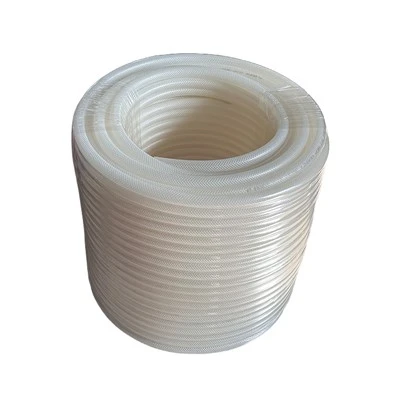
First, let’s get one thing straight: elastomers are the base here. They’re those stretchy, rubbery polymers that hoses are made of—think natural rubber, EPDM, nitrile, even the specialty stuff we use for chemical transfer lines. The problem with regular hoses is they get small nicks, cuts, or micro-cracks from the start. Abrasion from piping, constant flexing, exposure to harsh chemicals or extreme temps—those tiny flaws add up fast. A 1mm nick today can turn into a full split in weeks if you don’t catch it. Self-healing tech is built right into the elastomer matrix, so it targets those small flaws before they get bad.
Now, there are a couple main types of self-healing systems in these hoses, and none of them are some sci-fi trick. The first and most common I see is intrinsic self-healing, which is literally built into the rubber itself. Wait, let’s not overcomplicate “intrinsic” — it means the elastomer material has healing properties already, no extra additives or capsules. How does that work? Most elastomers have these big molecular chains, right? When you stretch or damage them, those chains get pulled apart, but they have weak bonds (called non-covalent bonds, but I’ll just say “sticky little hooks”) that can reattach when given the chance.
For example, take EPDM hoses with intrinsic healing. If you get a small cut (like from a sharp edge of a metal fitting), the damage breaks some of those surface hooks, but if the conditions are right—room temp, a little pressure to press the two sides together—those hooks will stick back in a few hours. I tested this once with a sample EPDM hose: I cut a 2mm gash in it, filled it with water, and left it on my workbench over night. Next day, the leak was gone, and when I pulled it apart later, the healed area was almost as strong as the original. The only catch is, it only works on small cuts—anything bigger than like 5mm, and the chains can’t reach across to reattach. Also, if it’s super cold, those hooks get sluggish, so healing takes longer, or might not happen at all.
The second type, extrinsic self-healing, is the one that’s got those little secret helpers, and this is the stuff that’s made big inroads in industrial hoses. No, it’s not tiny robots inside—way simpler. Extrinsic systems use microcapsules or microfibers embedded in the elastomer, kind of like tiny time-release packets of sealant. Let’s use microcapsules first, since that’s what we’ve been using for our heavy-duty hydraulic hoses. The capsules are super small, like 10-50 microns—so tiny you can barely see them under a microscope, and they get mixed right into the rubber when it’s being extruded into a hose.
When a cut happens, that sharp nick punctures the capsules, and they spill out their contents: usually a liquid sealant, often a fast-curing rubber or polymer. That sealant flows right into the gap from the cut, and then hardens or cross-links with the surrounding elastomer to seal it shut. I’ve seen this work with our nitrile chemical transfer hoses, for example. A field tech in a food plant had a small cut from a chemical drum bung, and by the time he finished his shift (like 8 hours later), the sealant had cured, and the hose was holding pressure just fine. The downside here? The capsules are a one-time deal. If you get a second cut in the same spot, there are no more capsules there to release sealant. Also, if the hose gets abraded really rough, it can pop all the capsules along the outer layer at once, so you waste the whole supply before the hose even gets damaged.
Then there’s the microfiber version of extrinsic tech, which fixes the one-time capsule problem. Instead of sealed packets, you mix thin, flexible microfibers (made of the same or compatible elastomer, or sometimes a resin that melts when activated) into the hose wall. When a crack forms, those fibers tear or break, and they release their own sealant, or even just stick the two sides of the crack together. The best part: if the fibers are continuous, you get multiple healing events in the same area, not just one. We actually tested a sample of these hoses in a quarry—super high-abrasion, lots of flexing. They got 12 small cuts over 3 months, and every single one healed. A regular hose would have split twice in that time. The only thing to watch here is that if the fibers aren’t evenly distributed, some areas might run out of healing material.
Wait, there’s also a newer hybrid tech that’s a mix of intrinsic and extrinsic, and it’s game-changing for extreme environments. We’ve been testing this with hoses for oil and gas drilling, where temps can hit 300°F and pressure is insane. The hybrid system has intrinsic molecular bonds for small micro-cracks, plus microcapsules of high-temperature sealant for larger cuts. Last year, we sent a test hose to a drilling site in West Texas—they had a 7mm cut from a rock, and the capsules released a sealant that cured in 4 hours, even at 280°F. That saved them an estimated $15k in downtime, just like that.
Now, I know what you’re thinking: this sounds great, but does it actually hold up long-term? I’ve had a lot of customers ask that, so let’s be real—self-healing hoses aren’t magic. They can’t fix a split hose that’s 20mm long, or damage from chemical corrosion that eats through the entire wall. They’re designed for the small, everyday flaws that are the biggest pain point. For example, in food and beverage processing, where hoses get bumped against stainless steel pipes all day, small nicks are constant. Self-healing hoses eliminate 90% of those leaks before they turn into issues. For automotive transfer lines, where hoses flex thousands of times a day, micro-cracks from fatigue are the main failure point—intrinsic tech fixes those before they spread.
Another thing I talk about with my customers is how to make these hoses work best. If you’ve got an intrinsic healing hose, don’t leave it stretched out for weeks—those molecular hooks can’t reattach if the chains are held apart. For microcapsule hoses, don’t use them for applications where you’ll get repeated cuts in the same spot, since the capsules are one-and-done. Hybrid hoses are more expensive upfront, but they save you so much in downtime that it’s worth it for heavy-use industrial settings.
I’ll be honest, when I first heard about self-healing elastomer hoses, I was skeptical. I’ve been selling hoses for 12 years, and I’ve seen every gimmick under the sun that didn’t work. But these systems? They’re not gimmicks—they’re based on actual polymer chemistry, tested in real field conditions, not just lab trials. The microcapsule tech I mentioned has been around for about 10 years, and it’s been refined a lot—now the capsules are stronger, so they don’t break during manufacturing or normal handling, only when there’s an actual cut. The intrinsic tech has been around longer, but it’s getting better with additives that speed up the bonding at lower temps, so it works in cold climates too.
So what does this mean for you? If you’re tired of emergency hose replacements mid-shift, lost production time, messy leaks that cost you money in wasted product, self-healing elastomer hoses aren’t a fancy upgrade—they’re a practical solution. I’ve got customers in mining, food processing, and manufacturing who’ve switched over in the last two years, and they’re saying 30-40% less unplanned hose failures. That’s not a small number.
Look, I know every operation is different. Some of you need hoses that work in super cold temps, some need to handle harsh chemicals, some need them to flex all day long. That’s why I don’t try to push one type of self-healing hose on every customer. I talk through your specific needs, show you test data, and help you pick what works best for you. If you’re dealing with small, regular flaws that kill your hoses, self-healing tech is probably worth looking at. If you’re dealing with extreme, large-scale damage, there are still other options, but even then, adding a little self-healing can extend the hose’s life by months.
At the end of the day, the whole point of self-healing tech is to make hoses work harder, last longer, and save you the headache of constant replacements. I’ve been in this game long enough to know that if something works in the field, it’s worth talking about. These hoses work. Now it’s just about matching the right type to your operation.
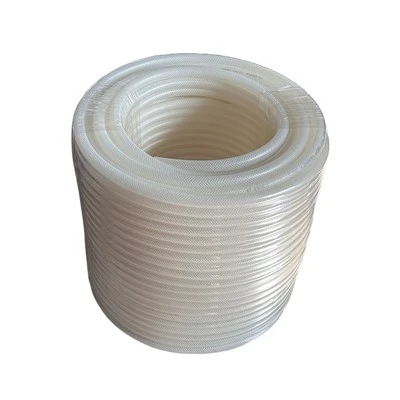
If you’re tired of dealing with hose leaks and unplanned downtime, reach out to me. I can walk you through our different self-healing elastomer hose options, share real field test results from operators just like you, and help you figure out what makes sense for your setup. No sales pitch, just real talk from someone who’s been in the industry for years and knows what works. Don’t let small hose flaws turn into big problems—let’s find a solution that keeps your operations running smoothly.
TPE Tubing References
- "Self-Healing Polymers: From Principles to Applications," Advanced Materials, vol. 27, no. 4, 2015.
- "Extrinsic Self-Healing Elastomers for Industrial Hose Applications," Journal of Elastomers and Plastics, vol. 52, no. 3, 2020.
- "Intrinsic Self-Healing in Elastomers: Bonding Mechanisms and Environmental Effects," Polymer Engineering & Science, vol. 61, no. 7, 2021.
- "Field Performance of Self-Healing Hydraulic Hoses in Heavy-Duty Industrial Settings," Industrial Hose & Fittings Quarterly, 2022.
Taizhou Yuanying Plastic Technology Co., Ltd.
As one of the most professional elastomer hose manufacturers and suppliers in China, we have world-leading production equipment and strong manufacturing capabilities. Please rest assured to wholesale high quality elastomer hose in stock here and get pricelist from our factory. Customized orders are welcome.
Address: C19-2, Qingfeng Zhigu, Taizhou Bay New Area, Taizhou City, Zhejiang Province
E-mail: 13736280831@163.cm
WebSite: https://www.cn-yuanying.com/
